Recent work
Surrey · KT10
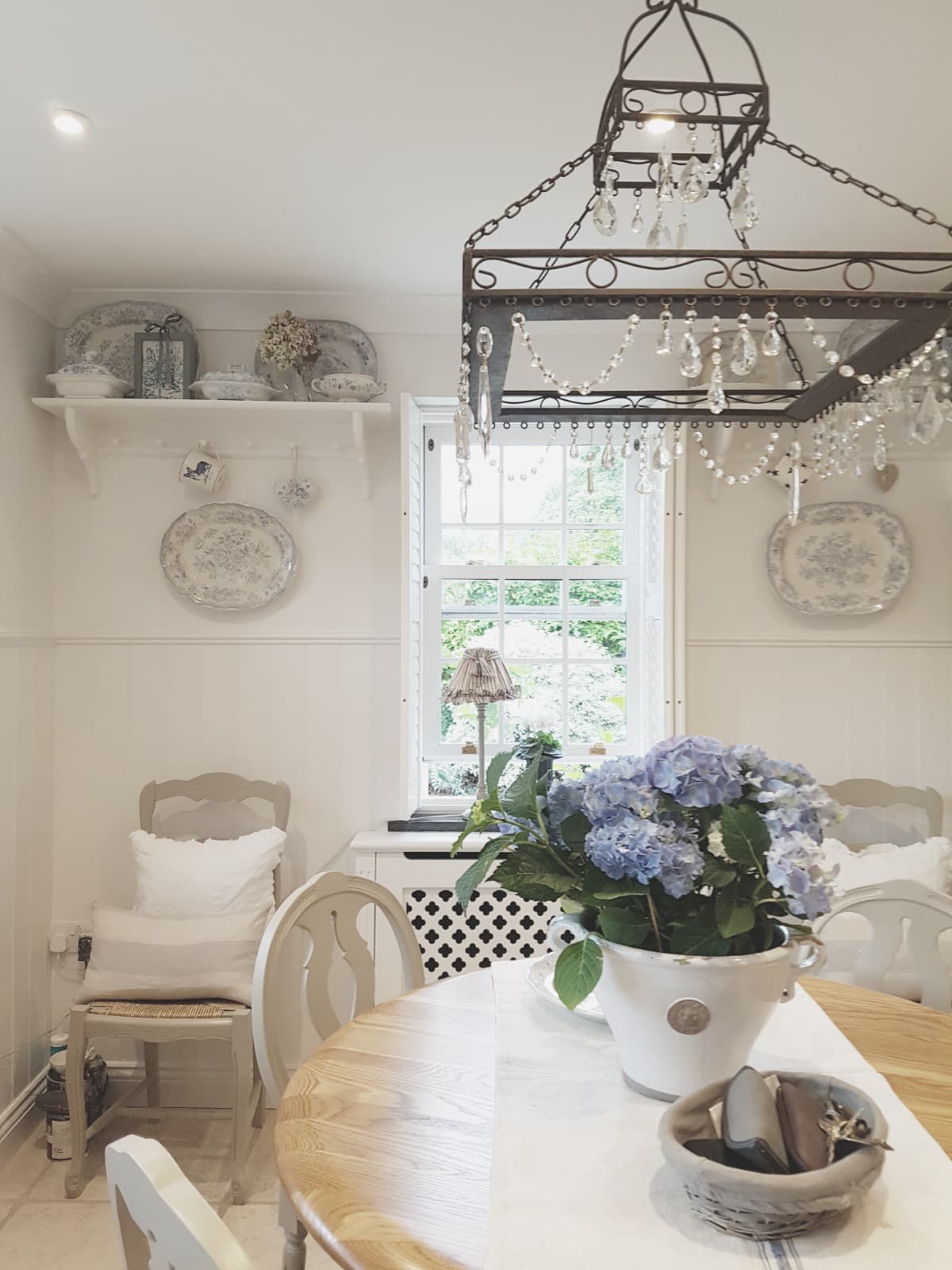
Esher covers more ground than most of my kitchen work: a compact Victorian kitchen in a villa near the High Street one week, a large open-plan family kitchen in Claygate the next. The method holds either way — the scale simply changes.
Kitchens in Esher
The period houses around Esher and Weston Green often have narrower kitchens with original joinery, sometimes a freestanding dresser or pantry cupboard worth painting rather than replacing. Claygate and Hinchley Wood add larger extended kitchens, usually shaker-style, opening onto a garden room where the light is unforgiving on any unevenness.
In an extended kitchen with bifold doors, low sun rakes across the doors and shows every ripple, so the sanding between coats matters more than the paint itself. In an older villa, it is about keeping original detail crisp instead of burying it.
A lot of Esher enquiries start as “can this be painted rather than replaced?” — and with sound carcasses and solid doors, the honest answer is almost always yes, for a fraction of a new kitchen.
Typical work in Esher
Covering around Esher
How it’s done
Every kitchen in Esher goes through the same eight-stage process. These four are the ones that quietly get dropped on a cheap job — and they are the reason a properly hand-painted kitchen is still sound in ten years.
Years of airborne cooking grease washed off before anything else — skip it and the primer never really bonds.
Every face, edge and moulding abraded by hand so the primer has something to grip.
Chosen for the actual substrate — high-adhesion over sealed factory finishes, stain-block over oak and knotty timber.
Brushed thin, laid off along the grain, de-nibbed between coats.
Recent work
Questions
If the carcasses are sound and the doors are solid timber or good MDF, painting is usually well worth it — you keep a kitchen that already fits the room and change its character completely. I will say plainly at the survey if I think a kitchen is not a good candidate.
It matters a great deal, and it is worth saying so before the job rather than after. Low sun raking across a run of doors shows every ripple and brush mark, so in those rooms I spend noticeably longer on the sanding and de-nibbing between coats. It is the same paint; it is the preparation that makes it look right in that light.
Properly degreased, keyed, primed and finished, a hand-painted kitchen should look right for a good ten years or more in normal family use. The areas that wear first are always the same — around handles, the edges of the most-used drawer fronts and the ends of an island — and those can be touched in without redoing the whole kitchen.
I’ll come and look at the cabinetry properly, tell you honestly whether painting is the right answer, and follow up with a clear written estimate.